What is the difference between a transponder key and a smart key?
A transponder key has to go in and turn: there is a chip inside the plastic that the car reads as you bring it to the ignition. A smart key stays in your pocket and the car starts on a button, because key and car talk over radio from a couple of metres away.
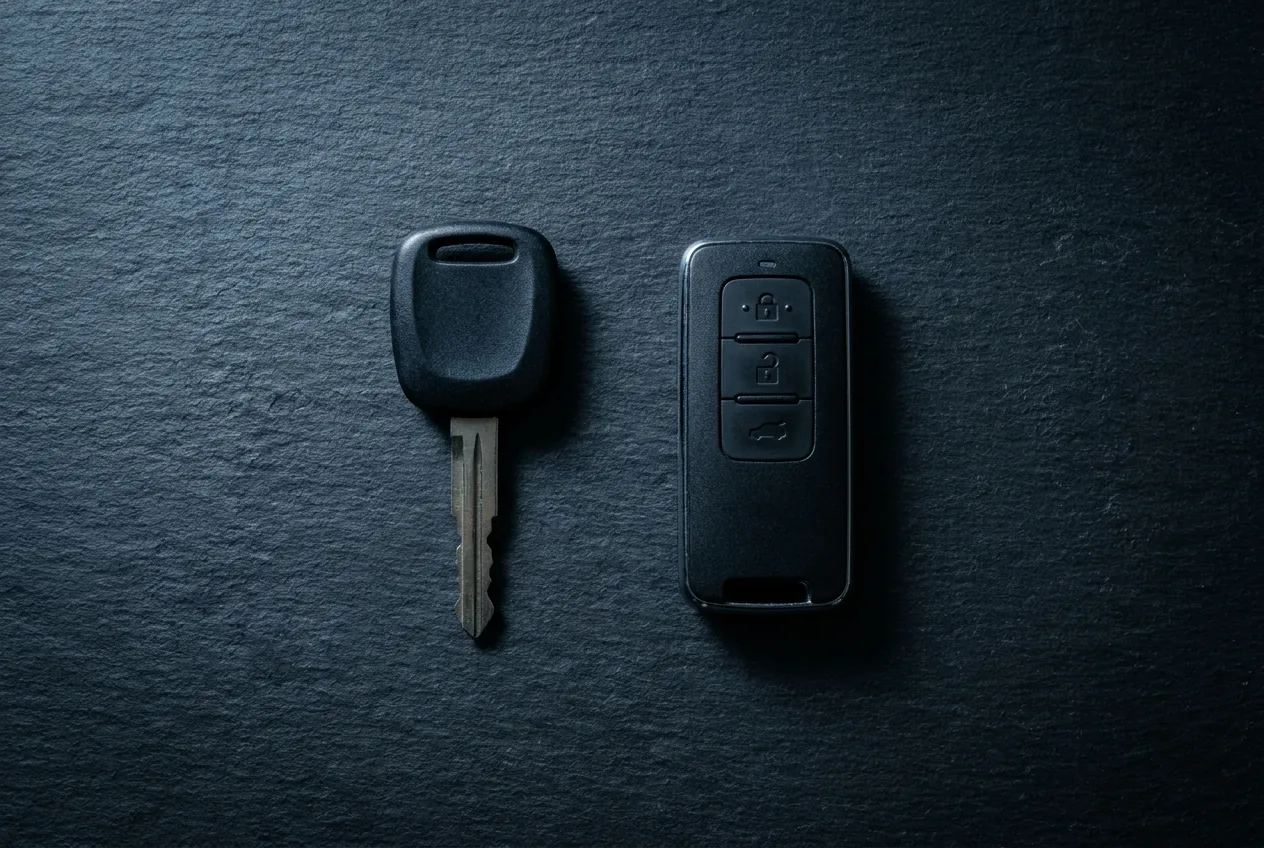
The transponder arrived in the nineties and it is what ended hot-wiring. It is a chip with no battery: it powers up off the signal from the ring around the ignition barrel, answers with a code, and if the code is not the one the car expects, the engine starts and dies two seconds later. A key cut only at a hardware store opens the door and never starts the car, and that is the most common call in this trade.
A smart key does carry a battery, which is why it speaks on its own. The car is constantly looking for it; when it recognises it nearby, it allows unlocking and starting. If the battery dies, almost every car has an emergency trick: hold the key against a specific spot on the steering column or the console, where a very short-range antenna reads it exactly like a transponder.
Both are equally easy to lose and neither is copied on a key-cutting machine. Two things are needed: cutting the metal to the right profile, which comes from the VIN, and registering the chip in the car's computer. The second is what takes the time and the equipment.
Worth knowing: most cars have a limit on how many keys can be registered, and deleting the old ones is part of the job when one is lost. If you lost a key and only replace the missing one, there is still a key out there that starts your car.
Where this comes from
Also in the glossary
Dealing with this right now?
Mobile service across Dallas – Fort Worth: we come to where the vehicle is.
Message on WhatsApp